Is Skydiving Scary? Here’s What It Actually Feels Like
First Time Skydiving
Posted by: Skydive Perris
3 months ago
Key Takeaways
Skydiving is scary for most people at first, but the fear usually peaks before the jump ever happens! The anticipation of making a jump, the plane ride, and the moment the door opens are often the most nerve-wracking parts. Freefall itself is typically smooth, stable, and freeing. In contrast to what most people think, skydiving is not scarier than roller coastersor out of the question if you’re afraid of heights. Many first timers are relieved to learn that tandem skydiving is highly structured with trained instructors, regulated equipment, and multiple safety systems. The greatest regret most people have is that they waited so long to make their first jump!

Is it scary to skydive? Yes, skydiving is scary. At least, before you do it.
Feeling nervous is completely normal. In fact, it would be pretty odd not to feel nervous before jumping out of an airplane! But here’s the part most first-time jumpers don’t expect: the fear usually peaks before the skydive itself even begins. The anticipation is intense, but the actual jump? It’s exhilarating in a way that’s difficult to explain until you experience it yourself.
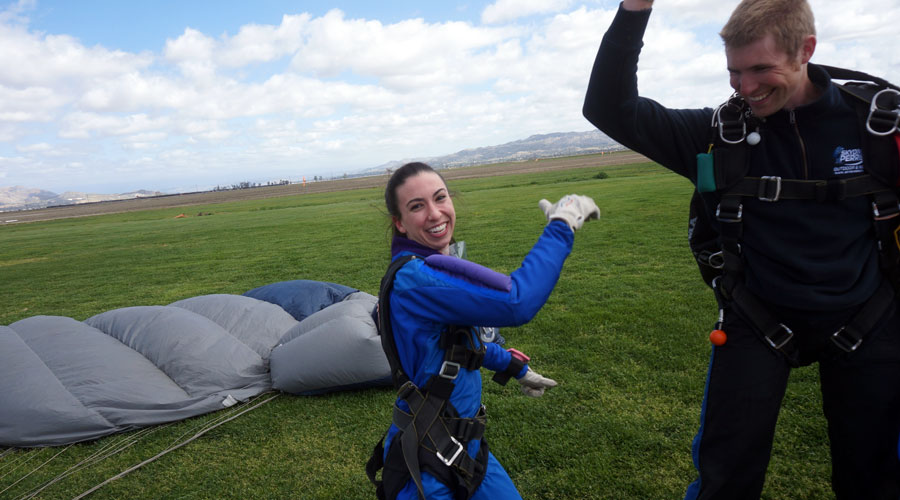
At Skydive Perris, we’ve met thousands of first-time tandem students who were convinced they’d panic, only to land asking when they can do it again! If you already want to skydive but keep hesitating because you’re wondering how scary is skydiving for the first time really, read on to find out what you can expect (for real).
Is Skydiving Scary? The Honest Answer
Is parachuting scary? Conceptually, skydiving sounds terrifying. Your brain hears “jump out of a plane” and the nerves kick in immediately; it’s just human nature. But the first-person experience of skydiving doesn’t feel the way most people imagine it will.
People expect overwhelming fear, a stomach-dropping sensation, or the feeling of flailing uncontrollably through the sky. In reality, most tandem jumpers describe freefall as surprisingly smooth, stable, and incredibly freeing. They even feel peaceful once the canopy deploys.
The hardest part about skydiving is everything leading up to the jump, not the skydive itself.
What Is The Scariest Part About Skydiving?
If you ask licensed skydivers what the scariest part about skydiving is, most will tell you the same thing: anticipation!
Tandem skydiving fear tends to be tied to the phases of the experience:
Booking Your Jump
The moment you book your skydive, it becomes real. Suddenly, your brain has days, weeks, or even months to imagine every possible scenario and catastrophize. Most people book well in advance, so the anticipatory anxiety can become agonizing!
The Night Before
How scary is skydiving? The night before the big leap is often when nerves spike the most, and this time will have you questioning all your life choices! You’re excited, but your mind keeps replaying the fact that tomorrow involves an airplane and an open door thousands of feet above the ground. Most people can’t sleep before their big day.
Pro tip: if you feel anxious and that you’ll have trouble sleeping, get to bed earlier than normal to give yourself a real shot at resting. If you can’t get proper, restful shut-eye, at least you have extra time to rest your body.
Arriving At The Dropzone
The dropzone atmosphere is calmer and more normal than people expect. At Skydive Perris, you’ll see experienced skydivers joking around, students gearing up, parachutes landing, people eating lunch at The Bombshelter, and an environment that feels more like an active outdoor community than some extreme, intimidating place. The drive to the dropzone is much more intimidating than walking through the door, we promise!
Fear generally starts to shrink away once the unknown becomes somewhat familiar.
The Plane Ride
This is where true adrenaline rather than “what if’s” kick in. As the airplane climbs higher, your brain knows there’s no turning back. You start focusing, listening intently to your instructor. You look outside and absorb the unique vantage point from the plane as you soar over Southern California. Your nervous energy shifts from panicky to excited.

The Door
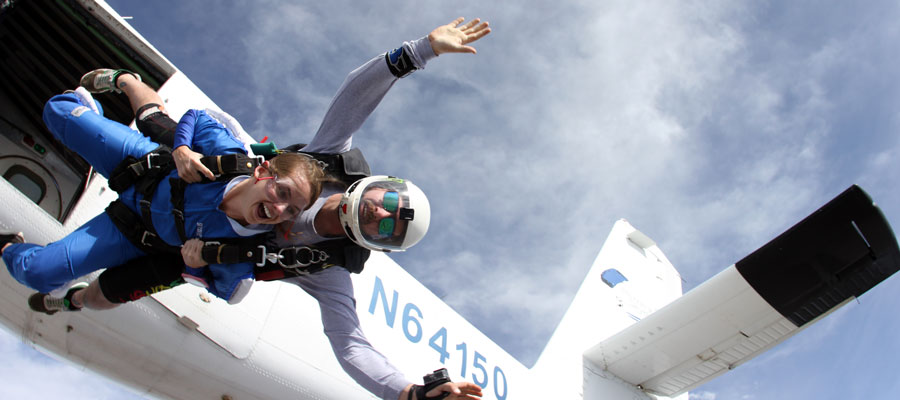
The moment the door opens, your human instincts tend to come back. You’re in a plane with the door OPEN! Even people who have wanted to skydive for years suddenly think: Wait … we’re actually doing this?!?!
Freefall
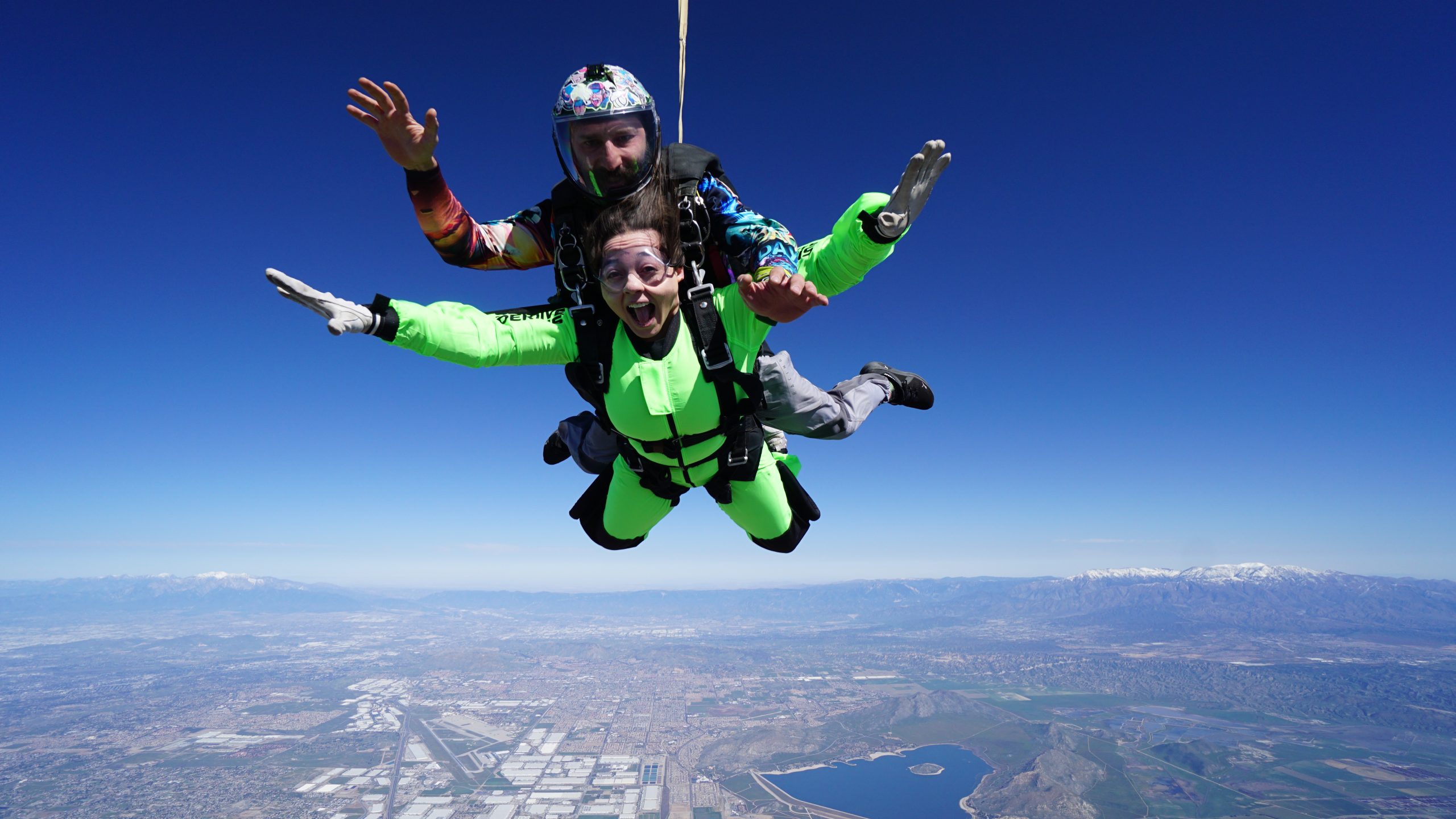
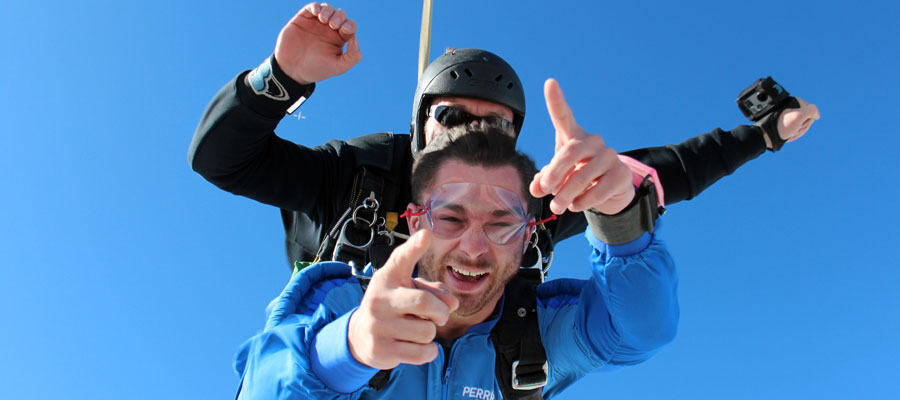
Then … you exit the plane. Almost immediately, the fear disappears. Your body’s fight-or-flight responses zip away and it’s just you, the sky, and the wind (and your instructor, of course!). And it’s truly exhilarating.
There’s something indescribably special about freefall. You’re suspended somewhere between the security of the plane and the certainty of standing on the ground. And the weird thing is that you don’t feel in limbo at all; you feel free.
What does freefall actually feel like? This surprises people more than anything else. Freefall does not feel like falling the way roller coaster drops feel. You don’t get that repeated stomach-whoosh sensation, and you really don’t even get it once! This is because the plane is already moving forward when you step out of it, and that forward momentum prevents you from feeling yanked into freefall.
Skydives where you do experience the classic stomach-drop feeling are from hot air balloons or helicopters, because the aircraft has minimal forward movement.
Instead, freefall feels more like being supported by a column of air. This is because you’re traveling at terminal velocity, which creates a constant cushion of air against your body. The wind pressure is strong, steady, and stabilizing. You feel free instead of frightened, which gives you the confidence to take in the view, the horizon, the clouds (or clear, blue sky), and the realization that you’re actually doing the thing you’ve been dreaming about!
Pro tip: Expect the wind to be incredibly loud. Think about opening all the windows in your car while speeding down the interstate, and then amplify that by 10! Everything quiets down quite a bit once the canopy opens.
Bonus Pro Tip: Remember three things: 1) Open your eyes, the view is fabulous; 2) Smile, you’ll look better on camera; and 3) Breathe (yes you can)!
Can You Skydive If You’re Afraid Of Heights?
“Should I skydive if I’m scared of heights?” This is a question we get a lot. The answer varies from person to person, but for most people the answer is yes!
In fact, many people who skydive are uncomfortable or legitimately fearful when it comes to heights in everyday situations. A fear of heights is usually associated with visual reference and proximity, like standing on a ladder, near a ledge, or at the edge of a building. Your brain can clearly measure the distance to the ground in these scenarios.
At 12,500 feet, your perspective changes completely. You don’t process sight distance the same way from skydiving altitude. It’s as if you’re looking at a map, which isn’t a threatening feeling at all.
How To Calm Your Nerves Before A Skydive
You don’t need to eliminate fear before skydiving, you just need to understand that fear is something that can come along with you on your skydiving journey. You CAN do it and feel anxious! Here’s how you can prep your nervous system for your jump:
Familiarity
The more you understand the process, the less your imagination will spiral. Asking questions and knowing how the tandem skydiving experience works can make a huge difference. If you have any specific questions or would like a general run down on how our dropzone works, get in touch! Better yet, come visit the dropzone, watch people land, and get to know us! You can even make an indoor skydive first to get a taste of freefall.
Physical Preparation
The day of your jump, eat a normal meal (in moderation), hydrate, and try to get decent sleep the night before. Adrenaline can feel like awful anxiety when you’re hungover, hungry, thirsty, and tired!
Don’t Rush
Arriving early can help more than people realize. Spend time watching parachutes land, seeing students return smiling, and getting acquainted with a new environment.
Reframe the Experience
Instead of asking, “What if I’m scared?” Ask yourself, “What happens if I never do the thing I know I want to experience?” This mindset shift can change everything (and not only when it comes to skydiving)!

How Safe Is Skydiving?
Tandem skydiving is far more structured than most people assume. Tandem instructors go through extensive training to get their instructor certification, and skydiving equipment is highly regulated and routinely inspected.
No sport is completely risk-free, and skydiving shouldn’t be presented that way. But the reality is that modern skydiving operates with significantly more training, technology, and oversight than many first-time jumpers realize.
The Part Of Skydiving Most People Regret
It’s not unusual to hear people wish they hadn’t waited so long to make their first skydive, or that they wish they’d gotten the video. But more than anything, we hear those who go on to earn their solo skydiving license wish that they’d started the process a whole lot sooner.
The fear beforehand can feel insurmountable because your brain is trying to protect you from the unfamiliar. But once you leave the plane, the experience becomes something else entirely. Afterwards, skydiving is often described as life-changing in the very best way. And, for many, once you experience the exhilaration and empowerment that comes with skydiving, it’s hard to keep your feet on the ground! Jumping out of a plane for the first time is a feeling you can’t otherwise duplicate!
If you’re ready to see what all the fuss is about, Skydive Perris is ready to support you! Come skydive with us! Blue skies!
You May Be Interested In:
Your First Tandem Skydive: A Step-by-Step Guide to What to Expect
2 weeks ago by Skydive Perris
Most Important Moments in Skydiving History
12 months ago by Skydive Perris
A Fail-Proof Gift to Impress Your Valentine
9 years ago by Skydive Perris
Why You Should Do Things You’re Afraid Of
9 years ago by Skydive Perris