Skip to Content

STEM Field Trips & School Group Experiences

Indoor Skydiving

Skydive Perris Posted by: Skydive Perris 3 months ago

Key Takeaways 
Indoor skydiving turns STEM concepts like gravity, drag, airflow, and Newton’s laws into hands-on learning students can see and feel. At Skydive Perris, groups can connect classroom physics to both indoor flight and real-world aviation, creating a memorable STEM field trip for schools, homeschool groups, scouts, and enrichment programs.

indoor skydiving near San Diego

The best STEM field trips don’t just entertain students, they help them connect classroom curriculum to the real world. At Skydive Perris, students can explore, observe, and experience physics, aerodynamics, and aviation through an indoor skydiving field trip that goes far beyond a typical day in or outside the classroom.

As one of the few facilities in the world with both a vertical wind tunnel and an active skydiving dropzone on the same property, Skydive Perris gives students the opportunity to see how scientific concepts apply to real flight.

Whether you’re planning a STEM enrichment program for a science class, homeschool co-op, or Scout troop, indoor skydiving offers a unique way to bring physics to life. Let’s take a deeper look at everything offered by a STEM field trip at our indoor skydiving tunnel! 

What Is Indoor Skydiving & Why Is It Considered STEM?

Indoor skydiving takes place inside a vertical wind tunnel. Powerful fans generate a vertical column of moving air inside the flight chamber, creating enough upward force to support the human body many feet above the ground.

By entering the wind tunnel, students directly observe scientific concepts that can be otherwise difficult to grasp. Instead of reading about forces, drag, and motion in a textbook, they can see and experience those principles at work in real time! 

The Physics Concepts Students Will See in Action

The physics concepts students experience in the indoor skydiving wind tunnel are the same as those involved in real skydiving freefall.

Terminal Velocity

Terminal velocity occurs when the force of gravity is balanced by the force of air resistance. Although true terminal velocity entails something falling (like during a real skydive), the wind tunnel is the next best thing to mimicking resisting gravitational force with wind. 

The upward-moving air creates enough drag to counteract gravity, allowing a flyer to remain suspended. This can be a difficult concept to understand, and it makes much more sense when you see it. 

Newton’s Third Law & Body Position

Newton’s Third Law states that every action has an equal and opposite reaction. In the wind tunnel, even small adjustments to a flyer’s arms, legs, torso, and even hands can create visible changes in movement. 

Students can observe how forces interact and how body position influences stability, direction, and control when resisting the wind. This cause and effect example is cooler than anything that can be shown in a classroom! 

Drag, Surface Area & Body Shape

Why does one body position feel more stable than another? The answer lies in drag and surface area! A flyer who spreads their arms and legs creates more surface area for the airflow to act upon, increasing stability. Narrowing the body reduces drag and changes how the flyer moves within the airflow. During a skydive, this changes how a skydiver moves through freefall. A head-down or sitting / head-up position is much more difficult to maintain than a belly-to-earth position. 

Students can observe how changing shape affects performance, which creates a practical lesson in aerodynamics!

Air as a Fluid

Many students think of air simply as “wind,” but in physics, air is considered a fluid.

A fluid is any substance that can flow and take the shape of its container. While we often think of liquids when we hear the word “fluid,” gases behave this way too. Air flows, exerts pressure, and moves around objects just like water flowing around a rock in a stream.

The wind tunnel provides an opportunity to discuss fluid dynamics, airflow, turbulence, and how gases behave around objects in motion. Students can observe how air moves around different shapes and explore why some designs create more drag than others.

Indoor Skydiving: STEM Concepts by Age Group

Want to get students excited about physics with some fun STEM activities? Take them indoor skydiving! Kids of all ages can participate; the minimum age requirement for the wind tunnel is just three years old!

One of the unique aspects of wind tunnel-based STEM education is that the same experience can support different learning objectives depending on a student’s age and academic level.

Elementary School

Focus: Observation and curiosity

Elementary students are naturally fascinated by flight. At this age, field trips focus on observation, discovery, and simple cause-and-effect relationships rather than calculations.

What They Learn

  • What makes things fly
  • How wind creates lift and drag
  • Why some objects fall faster than others
  • Basic forces such as gravity and air resistance

Middle School

Focus: Experimentation and data collection

Finding 6th to 8th grade field trip ideas that appeal to every student can feel impossible,  but indoor skydiving is across-the-board engaging. Middle school students move beyond observation and begin exploring the “why” behind flight. The field trip experience becomes more interactive and introduces students to data collection and experimentation.

What They Learn

  • Forces and motion
  • Lift, drag, gravity, and thrust
  • Introduction to terminal velocity
  • How shape affects flight performance

High School

Focus: Physics and engineering applications

High school students engage with the wind tunnel as a practical physics laboratory! The experience connects directly to concepts they encounter in physics, engineering, and advanced STEM courses.

What They Learn

  • Terminal velocity calculations
  • Free-body diagrams
  • Newton’s Laws of Motion
  • Aerodynamics and fluid dynamics
  • Engineering design principles

College & Adult Learners

Focus: Applied aerodynamics and career pathways

For college students and adult learners, the indoor skydiving experience shifts from introductory STEM education to applied science and professional relevance.

What They Learn

  • Advanced fluid dynamics concepts
  • Aerodynamic design and testing
  • Human body flight mechanics
  • Aerospace and aviation applications
  • Engineering problem-solving and experimentation
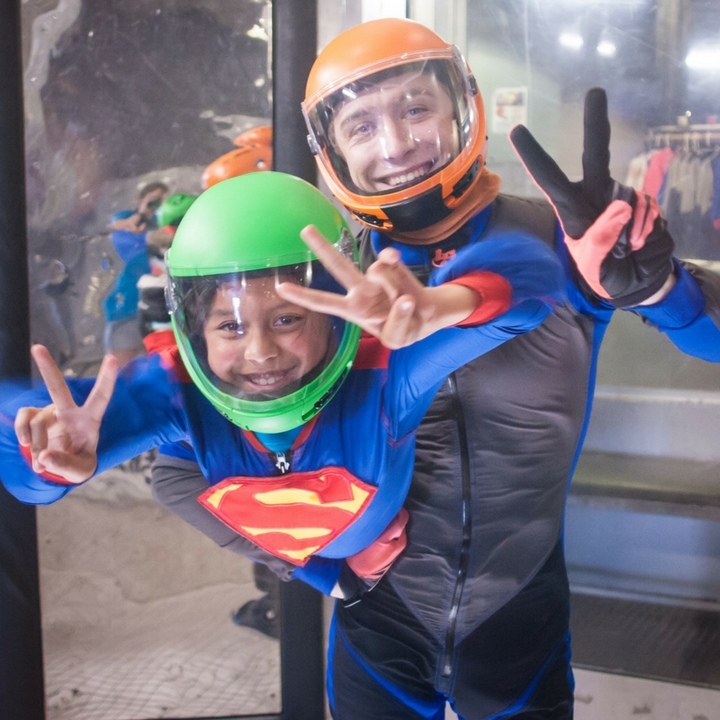
kid having a blast indoor skydiving

Why a Skydive Perris Field Trip Is Different

Many indoor field trips offer hands-on learning, but few combine those lessons with a working aviation environment.

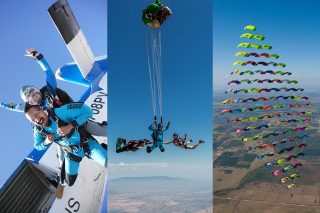
At Skydive Perris, students can observe a busy skydiving dropzone, watch aircraft operations, see parachutes in flight, and connect what they learn in the wind tunnel to real-world aviation activities, all in real time! For example, a plane letting the flaps down will affect its performance, and the same is true for changing body position in the tunnel. 

The ability to experience both indoor flight and tour a functioning dropzone without leaving the property creates a rich learning environment that’s unlike any other STEM field trip in Southern California!

For group visits, our on-site restaurant – The Bombshelter – provides convenient lunch options while students continue to observe aircraft and skydiving activity throughout the day.

Who Is an Indoor Skydiving STEM Field Trip Right For?

Educational indoor skydiving events are for children of all ages and adults because the experience can be adapted to suit a broad range of learning objectives. Groups we frequently see at Skydive Perris include:

  • Public and private school science classes
  • Homeschool groups and co-ops
  • Scout troops
  • Civil Air Patrol cadets
  • 4-H clubs
  • STEM enrichment programs
  • Gifted and talented education programs
  • Youth leadership organizations

Planning Your Field Trip to Skydive Perris

When organizing a STEM field trip to Skydive Perris, it’s important to consider student age ranges, group size, learning targets, and scheduling needs. Students can gain value from the experience with minimal preparation, and programs can often be tailored to support specific educational objectives.

For detailed information about availability, group accommodations, educational resources, and planning options, visit our Field Trips & STEM page.

FAQs About STEM & Indoor Skydiving

Is indoor skydiving a good field trip?

Yes. Indoor skydiving combines hands-on learning with observable physics concepts, making it an impactful educational experience for many age groups. Plus, it’s super fun! 

What grades can do an indoor skydiving field trip?

The indoor skydiving field trip experience can support elementary, middle school, high school, college, homeschool, and enrichment programs. Anyone, really, as long as they meet the indoor skydiving requirements

What is the best age to start STEM? 

It depends on the child! STEM learning is fun at all ages, and there are age-appropriate avenues for exploration and every stage. Experiences in the skydiving wind tunnel can be as in-depth or surface-level as you’d like, making it a great choice for early learners all the way up to adults.

Is indoor skydiving safe for kids?

Indoor skydiving takes place in a controlled environment under instructor supervision and is designed to be safe and accessible for young participants.

Can homeschool groups participate?

Absolutely! Homeschool groups and co-ops frequently use educational field trips to supplement science curriculum with hands-on learning experiences.

What should students wear?

Comfortable clothing and secure, closed-toe shoes are recommended for participation. A jumpsuit and helmet will be provided! 

Ready to Fly? 

Call to book your indoor skydiving STEM adventure today!

Book
Now
Stay Connected
Get personalized newsletters tailored to your interests! Choose from tandem skydiving, indoor skydiving, fun jumper events, or happenings at the Bombshelter Restaurant and Bar.